

 By
By Barcelona is one of those cities that instantly captures your attention. Before visiting, I had seen countless photographs of its colorful streets, unique architecture, and beautiful Mediterranean coastline. However, nothing prepared me for the experience of actually walking through the city with my wife, discovering its hidden corners, listening to fascinating stories, and immersing ourselves in the local culture.
During our trip to Barcelona, we decided to join a walking tour instead of relying solely on guidebooks or tourist buses. Looking back, it was one of the best decisions we made. Walking allowed us to experience the city at a slower pace, notice details we would have otherwise missed, and truly connect with Barcelona’s history and atmosphere.
Why We Chose a Walking Tour
We arrived in Barcelona after several days of traveling across Spain. Like many visitors, we had a list of famous attractions we wanted to see, but we also wanted to understand the city beyond the typical tourist experience.
A walking tour seemed like the perfect solution. It offered local insights, historical context, and the opportunity to explore neighborhoods that aren’t always highlighted in travel guides.
On a pleasant morning, my wife and I met our guide near Plaça de Catalunya, the bustling square that serves as the heart of Barcelona. The weather was perfect—blue skies, a gentle breeze, and temperatures warm enough to enjoy being outdoors without feeling uncomfortable.
As we waited for the tour to begin, we watched locals heading to work, tourists studying maps, and street performers entertaining passersby. Even before the tour started, Barcelona already felt alive and energetic.
Walking Down La Rambla
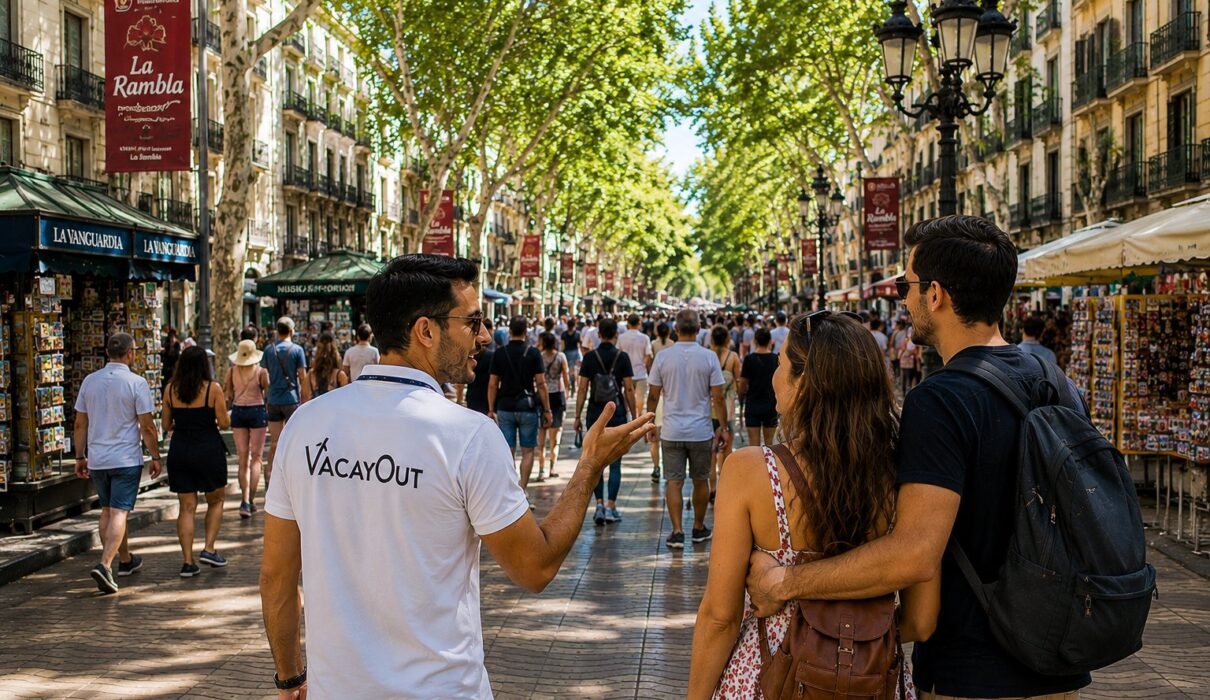
Our first stop was the famous La Rambla, one of Barcelona’s most iconic streets. Stretching from Plaça de Catalunya to the waterfront, La Rambla is lined with cafes, shops, flower stalls, and street performers.
Walking hand in hand with my wife, we enjoyed the lively atmosphere. Every few steps there seemed to be something new to catch our attention. Human statues dressed as historical characters posed perfectly still until someone dropped a coin into their collection box. Artists displayed colorful paintings, while musicians filled the air with Spanish melodies.
Our guide explained how La Rambla has been a central gathering place for centuries and shared stories about the street’s evolution from a simple watercourse into one of Europe’s most famous boulevards.
Although crowded, the street never felt overwhelming. Instead, it felt like the beating heart of Barcelona.
Discovering the Gothic Quarter
The highlight of the walking tour was undoubtedly the Gothic Quarter, known locally as Barri Gòtic.
As soon as we entered its narrow medieval streets, it felt like stepping back in time. The busy modern city disappeared behind us, replaced by ancient stone buildings, hidden courtyards, and winding alleyways.
The guide pointed out architectural details that we would have completely overlooked on our own. Small carvings above doorways, centuries-old balconies, and remnants of Roman walls revealed layers of history hidden throughout the neighborhood.
My wife particularly loved the charming atmosphere of the Gothic Quarter. Every corner seemed worthy of a photograph. We frequently paused to admire picturesque streets decorated with hanging plants and colorful shutters.
One memorable moment occurred when we entered a quiet square tucked away from the crowds. Children were playing near a fountain while local residents enjoyed coffee at outdoor tables. It felt authentic and peaceful—a side of Barcelona many tourists never see.
Barcelona Cathedral
The walking tour eventually led us to Barcelona Cathedral, one of the city’s most impressive religious landmarks.
Standing before the massive Gothic structure, we were amazed by its intricate facade. The countless decorative details seemed almost impossible to absorb in a single glance.
Our guide shared stories about the cathedral’s construction and the important role it has played throughout Barcelona’s history. Hearing these stories while standing in front of the actual building made the experience much more meaningful.
Inside, the cathedral was equally impressive. Sunlight streamed through stained-glass windows, creating colorful patterns across the stone floors. The atmosphere was calm and reflective, providing a welcome contrast to the busy streets outside.
My wife spent several minutes quietly admiring the architecture while I explored the various chapels and historical displays.
Hidden Gems and Local Stories
One aspect that made the walking tour special was the guide’s ability to reveal hidden gems that most visitors miss.
We visited small squares that don’t appear in many guidebooks, learned about local legends, and discovered buildings with fascinating histories. One story involved a medieval execution site, while another explained the symbolism behind certain architectural features found throughout the city.
These stories transformed ordinary-looking locations into memorable experiences.
Without a guide, we likely would have walked past many of these places without realizing their significance.
Experiencing Local Culture
Another advantage of the walking tour was the opportunity to observe daily life in Barcelona.
As we moved through different neighborhoods, we saw residents shopping at local markets, chatting with neighbors, and enjoying leisurely lunches at outdoor cafes.
Unlike sightseeing from a bus or taxi, walking allowed us to feel connected to the city’s rhythm.
My wife and I stopped at a small bakery recommended by our guide. We purchased freshly baked pastries and enjoyed them while sitting in a quiet square.
It was one of those simple travel moments that often become the most memorable.
Admiring Gaudí’s Influence
Although our walking tour focused mainly on Barcelona’s historic center, Gaudí’s influence was impossible to ignore.
The guide pointed out several buildings that showcased the architect’s unique style. Even when viewed from a distance, his work stood out immediately.
The organic shapes, colorful mosaics, and imaginative details seemed unlike anything we had seen elsewhere in Europe.
Listening to stories about Gaudí’s vision helped us appreciate his later masterpieces even more when we visited them independently.
The Food Stops Along the Way
No visit to Barcelona would be complete without experiencing its food culture.
Throughout the tour, our guide recommended local restaurants, tapas bars, and cafes. These recommendations proved invaluable during the rest of our stay.
One afternoon after the tour ended, my wife and I visited a traditional tapas restaurant suggested by our guide.
We ordered patatas bravas, croquettes, grilled vegetables, and fresh seafood. Paired with a glass of local wine, it became one of our favorite meals in Barcelona.
Because the recommendation came from a local guide rather than a tourist brochure, the restaurant felt authentic and reasonably priced.
Reaching the Waterfront
As the walking tour neared its conclusion, we made our way toward the waterfront.
The atmosphere changed noticeably as we approached the Mediterranean Sea. Palm trees lined the pathways, and the fresh sea breeze provided relief from the afternoon warmth.
Standing near the harbor with my wife, we reflected on everything we had learned during the past few hours.
What initially seemed like a beautiful city now felt richer and more meaningful. We understood its history, appreciated its architecture, and felt connected to its culture.
The walking tour had transformed Barcelona from a collection of famous landmarks into a living, breathing city with countless stories.
Tips for Taking a Barcelona Walking Tour
Based on our experience, I would recommend a few practical tips:
Wear Comfortable Shoes
Barcelona’s historic streets can be uneven, and you’ll likely walk several kilometers during the tour.
Bring Water
Especially during warmer months, staying hydrated is important.
Carry a Camera
There are endless photo opportunities throughout the city.
Ask Questions
Local guides possess incredible knowledge and often enjoy sharing additional stories.
Arrive Early
This allows time to familiarize yourself with the meeting point and enjoy the surrounding area.
Final Thoughts
Our Barcelona walking tour became one of the highlights of our entire Spain trip. While famous attractions like the Sagrada Família and Park Güell are undoubtedly spectacular, exploring the city on foot offered something equally valuable—a genuine understanding of Barcelona’s character.
Walking through medieval streets, hearing fascinating historical stories, discovering hidden squares, and experiencing local life alongside my wife created memories that continue to stand out long after the trip ended.
The tour helped us see beyond the postcard images and connect with the city in a more personal way. We laughed together while getting lost in narrow alleyways, shared delicious pastries in quiet plazas, and marveled at centuries of history around every corner.
If you’re planning a visit to Barcelona, I highly recommend setting aside time for a walking tour. Whether it’s your first visit or your fifth, exploring the city on foot offers perspectives that simply can’t be experienced any other way.
For us, it wasn’t just a sightseeing activity—it was an unforgettable journey through the heart and soul of Barcelona, one step at a time.